

Securing the nation
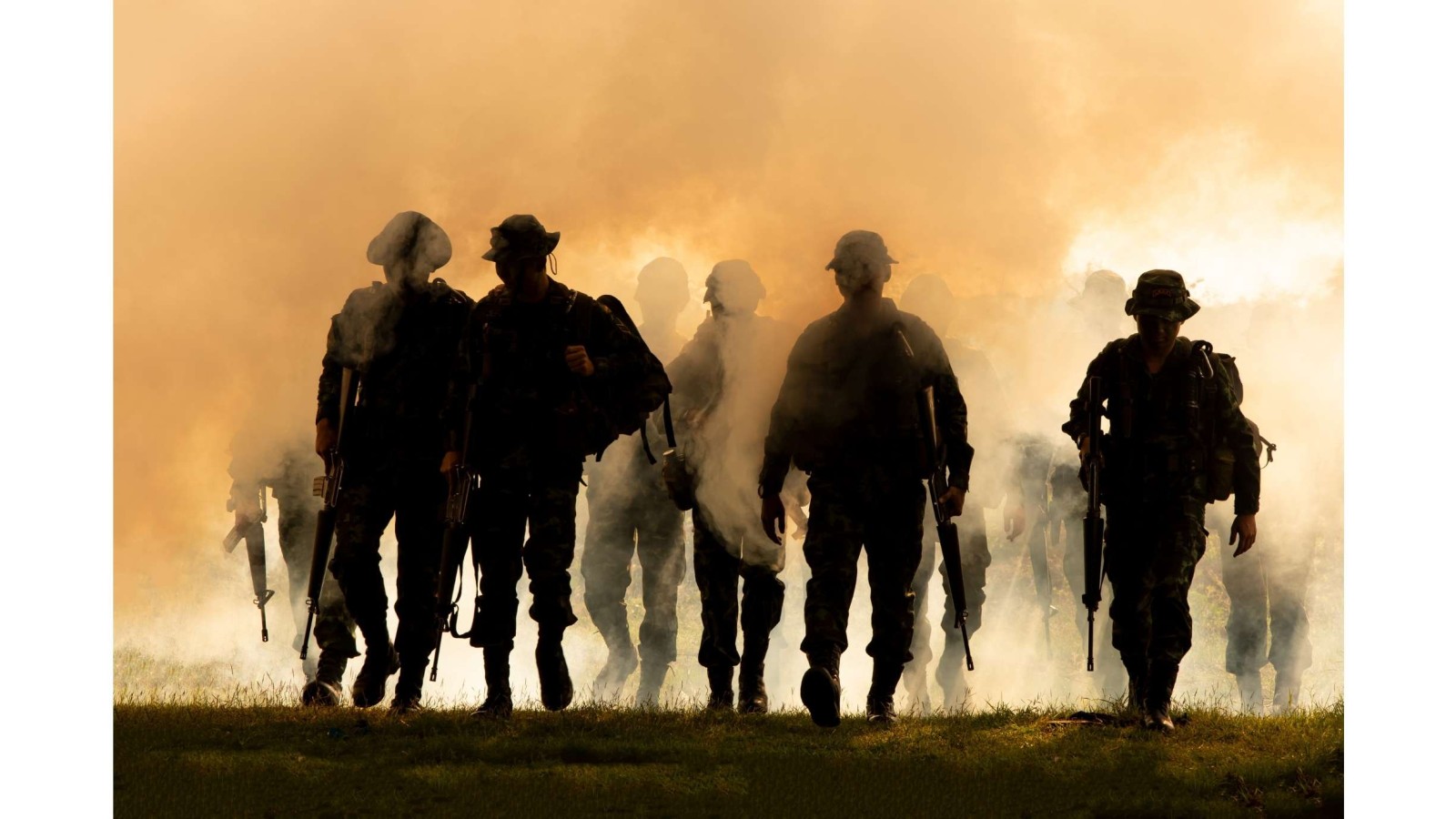
Australia’s defence strategy should be coherent and have our national interest at its core. We should not squander billions of dollars on doubtful long-range, long lead-time war fighting equipment that offers Australia little protection.
The issues
The US is a friend and ally but has drawn us into too many far-flung and failed wars – Vietnam, Iraq, Afghanistan and now potentially China with its sights on Taiwan. Instead, Australia should be protecting its borders and tackling the real and present threats we face.
Our plan
- Adopt the posture of defence of Australia rather than offence
- Be an independent voice in foreign affairs
- Acquire defence equipment that is smaller, smarter, far less costly and more effective than the current plan in defending the nation.
- Broaden defence to encompass diplomacy, particularly in Southeast Asia and the Pacific Islands
- Recruit, train and fully equip army reserves for homeland defence role
- Substantially increase Australia’s Airforce capability
- Purchase and deploy space reconnaissance and communications assets
- Raise the level of cyber and intelligence capability
- Complete and act on the risk assessment to Australia of global warming
- Entrust the Parliament to decide whether or not to go to war or engage in war-like operations
- Initiate arms control talks for the region and raise the alarm about existential threats from nuclear weapons
The evidence
The Labor Government has taken a more measured approach to China than its predecessor but with Australia’s interests now ever more deeply aligned with the US, our economic and geopolitical interests in East Asia and the Asia Pacific regions are at risk. Threats to Australia are more likely to be economic and disruptive than any sort of invasion and quite different from the role the US adopts.
The war between Hamas and Israel, the death of over 40,000 Palestinians, mostly civilians, the ongoing military strikes in Gaza and Rafah, the hostages and the crisis of mass starvation and displacement are undermining regional stability.
It is said China’s build-up is now the largest and most ambitious of any country since the Second World War at around 500 nuclear weapons. This is a small number compared with those of Russia and the US. However, the UN estimates that just 400 of today’s 22,000 nuclear weapons could wipe out all humanity and other biota.
Australia’s foreign policy directly affects our trade, security, peace, and international standing. Diplomacy should be the front line of advancing Australia’s national interest through persuasion and good relationships, especially in our Asia-Pacific region. However, diplomacy, record low levels of foreign aid.
Australia should initiate arms control talks for the region and raise the alarm about existential threat of nuclear weapons.
Australia’s foreign policy directly affects our trade, security, peace, and international standing. Diplomacy should be the front line of advancing Australia’s national interest through persuasion and good relationships, especially in our Asia-Pacific region. However, underfunded diplomacy and record-low levels of foreign aid undermine our effort.
Defence equipment should be smaller, smarter, far less costly and more effective, such as:
- Uncrewed aircraft or land-based missiles instead of vulnerable frigates – saving $36b
- 20 advanced diesel-electric submarines that can stay submerged for weeks instead of 8 nuclear submarines – saving $80b ·
- Anti-ship missiles instead of more armoured vehicles
We must recruit, train, fully equip and properly integrate Defence Reserves for homeland roles.
“The single greatest contribution to national security this Reserve Strategic Review submission can make is to enable an outcome where Government and Defence approach future planning with a common understanding that the nation requires a fully integrated and aligned ADF, with Permanent and Reserve components that complement and sustain each other.”
Australia’s Airforce capability must be strengthened. RAAF chief, Mel Hupfeld says the RAAF is the region’s most technologically advanced air force, but technology alone will not see it succeed. We must purchase and deploy space reconnaissance and communications assets.
The National Defence Strategy was released in April however, the Australian Strategic Policy Institute says that of a budget of $9-$12 billion, a mere $590 million will be spent on ‘enhanced space capabilities’, including satellite communications, space sensors and space control.
Raise the level of cyber and intelligence capability. An Independent Intelligence Review, due to report mid-year, raised questions about how Australia will build and maintain cyber capability and improve communications.
Complete and act on the risk assessment to Australia of global warming. The UN and leading international security agencies have identified climate change as a security threat for the last decade. Rapid climate change is likely to create, accelerate and exacerbate already unstable situations world-wide. Forced migration, social and political tensions are likely to cause conflict and violence.
Climate change has a direct effect on warfighting, threatening to overwhelm our security and undermine Defence’s contribution to Pacific Step-Up initiatives which puts us at a competitive disadvantage in developing regional influence and power projection.
Overall, climate change is degrading stability and increasing complexity in Defence and Humanitarian Assistance and Disaster Relief environments. This is having a major effect on our region, as archipelagic nations are seeing their whole landmass at risk of falling beneath rising sea levels, threatening habitability. The inhabitants of these archipelagic nations will likely become climate refugees, forced to find a new home.
Australia’s reluctance to act seriously on climate, threatens Australia’s interests and standing on the global stage.
The decision to go to war is one of the most serious choices any government will face. Though not explicitly stated in the Australian Constitution, in practice, the power to make war, deploy troops and declare peace, has been assumed by the prime minister; not the governor general nor the parliament. It is however constitutionally possible to change this practice by agreement of the parliament. Since 1985 the Australian Democrats attempted to remove the exclusive power of the government to commit Australia to war, without success. In 2023 that power was again affirmed by a joint parliamentary committee.
Both Houses of Parliament should be required to authorise by resolution any decision to commit the Australian Defence Force to warlike operations or potential hostilities within sixty days of the decision to commit forces. Given that the contemporary kinds of conflict tend to run for many years, ADF deployments should then be reconsidered by the Parliament on an annual basis.
former Australian Army chief, Peter Leahy