The Government was warned. They pressed ahead anyway.
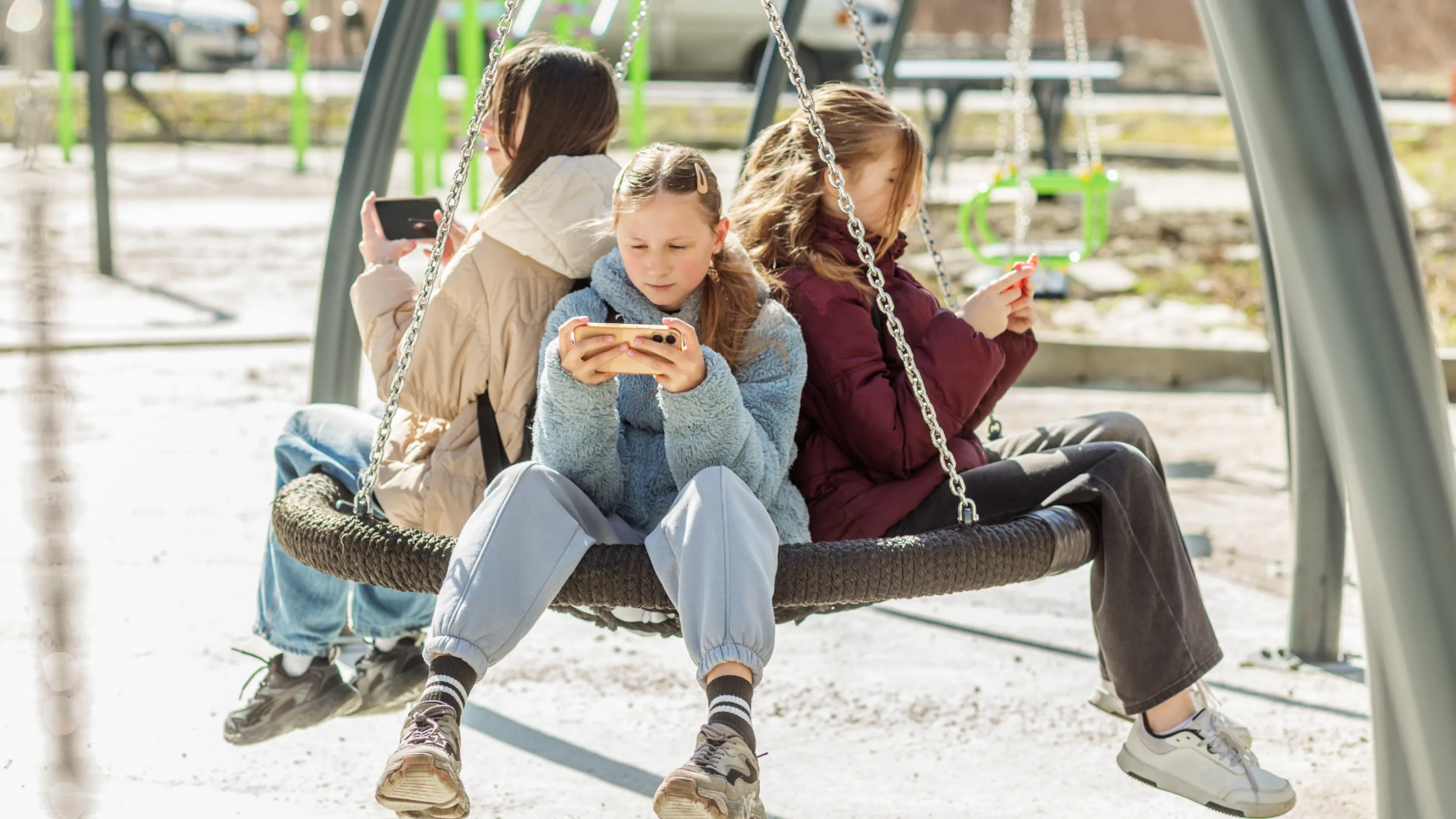
When the Albanese Government rushed through the under 16 social media ban, the Australian Democrats opposed it because we could see the flaws, even though we did not seek to diminish the lives lost: a law that sounded simple, but could only be enforced by pushing Australia toward something far more dangerous:
ID checks. More personal information handed to social media companies that already have a long history of harvesting, misusing and monetising people’s data.
That is why we put our opposition on the record in Submission 20 to the Senate inquiry into the Online Safety Amendment (Social Media Minimum Age) Bill 2024 [Provisions].
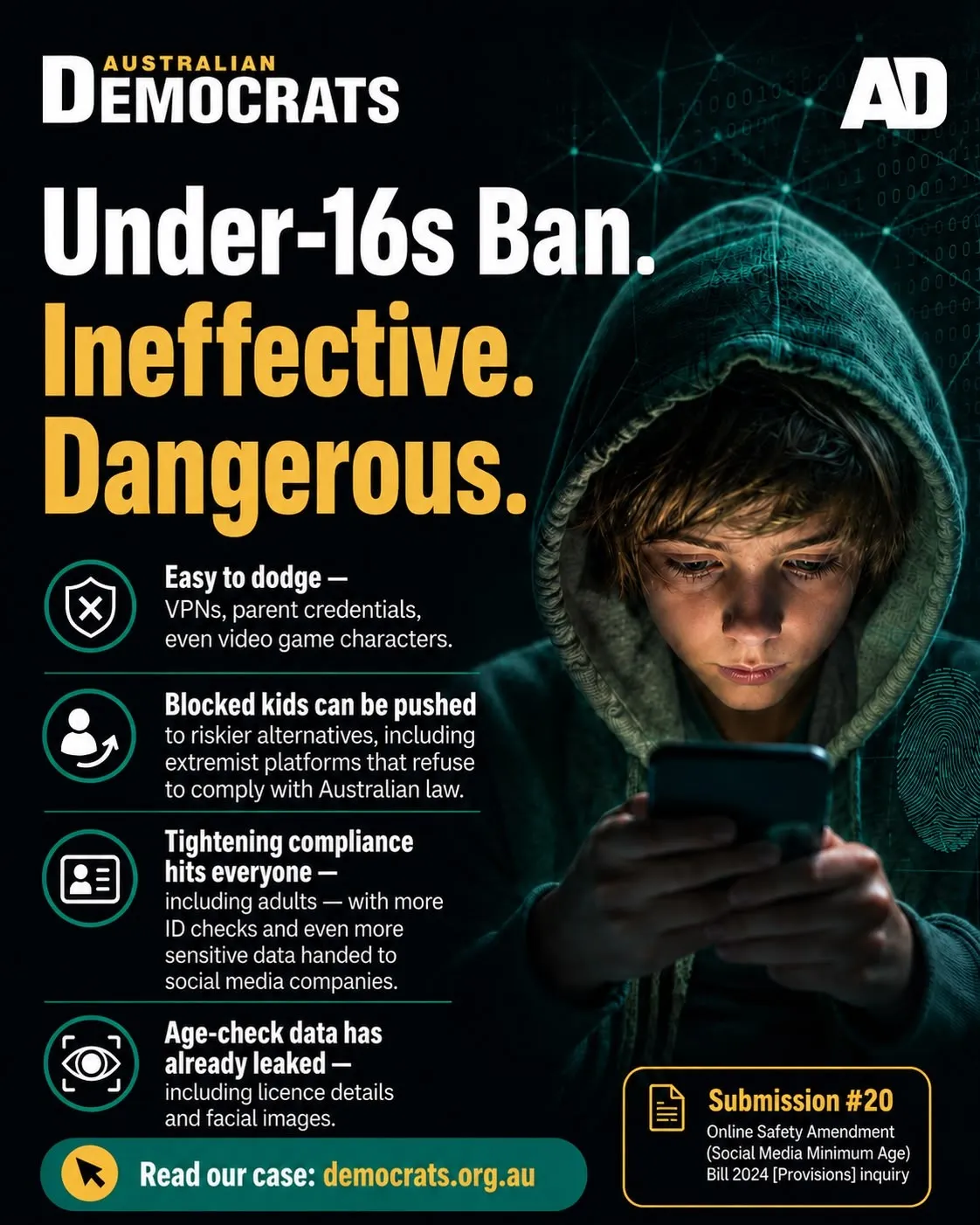
We said then what is becoming clearer now: this ban is dangerous, intrusive and it will not work.
And it has not worked.Young people are still finding ways around it. Some are using parent credentials. Some are using VPNs to appear as though they are in another country. Some age-checking systems have reportedly been fooled with masks, repeated attempts, AI tricks and even video game characters.
That is not a serious child safety framework, it is a weak technical barrier, disguised as national policy. There is danger in what might come next. A failed law might make the government double down and increase pressure - including for adults- to prove who they are before they can participate online...even if that participation is speaking out, organising, learning, campaigning or participation online.
It means more people being pushed toward face scans, identity documents, age-profiling systems and private verification providers. It means more sensitive data sitting in more places, creating more targets for hackers and more opportunities for misuse.
We have already seen the warning signs overseas. Discord confirmed that around 70,000 users may have had government-ID photos exposed through a third-party provider used for age-related appeals. That is exactly the kind of honeypot we warned about: once a system normalises collecting identity documents and face data at scale, leaks stop being hypothetical.
And if the Government tries to close every loophole, the civil liberties risks only grow.
Cracking down on VPNs would not just affect teenagers trying to dodge a bad law. VPNs are used every day by journalists, lawyers, activists, small businesses, remote workers and ordinary Australians who want basic privacy and security online. Treating VPN use as suspicious would hurt civil liberties and make Australia a harder, riskier place to do business.
Worse still, when young people are locked out of mainstream, regulated spaces, some do not simply disappear from the internet. They look elsewhere — including less accountable platforms, darker online communities and extremist spaces that refuse to comply with Australian law. That is not safer. That is pushing risk out of sight.
Children deserve real protection online. That means regulating harmful platform design, algorithmic amplification, targeted advertising, data harvesting and corporate negligence.
It does not mean building a surveillance checkpoint at the front door of the internet.
The Australian Democrats will keep saying it plainly: child safety must not become a Trojan horse for mass identity checks, biometric surveillance and the erosion of online anonymity. We welcome the conversations that have happened in this space, and will always take child online safety seriously. We sincerely hope the government finds a way to achieve it without subjecting us all to the possibility of the theft or misuse of our data and identities.
Read our case, share it, and help us keep the bastards honest.