
2022 Platform: Gender Equality in Foreign Affairs
Please note that this is the ‘Gender Equality in Foreign Affairs’ platform we took to the 2022 Election. Please refer to our current platform for our plans for the upcoming election.
Why we need this
Australia is still a long way from having equal representation in the Parliament and this matters because the evidence shows that increased female participation in parliaments reduces the likelihood of human rights abuse and conflict. Globally, women must be part of peace processes for the peace to endure and, to be successful, women must be decision-makers in tackling global gender-based violence, achieving social justice and democracy.
Reform starts here in Australia in our parliaments. But there is much that can be done in foreign affairs – our embassies, our international relations and our overseas aid programs.
Minister for Foreign Affairs, Marise Payne said to the UN Human Rights Council “For societies to be secure, stable and prosperous, we must address gender inequality.” But are we?
Leanne Smith, Director, Whitlam Institute, points out in the Saturday Paper Nov 2020:
Women currently occupy key foreign policy roles in Australia, including the posts of Foreign Affairs minister, Defence minister, shadow Foreign Affairs minister and the top foreign policy civil service role. We even have an ambassador for gender equality, Julie-Ann Guivarra, Australia’s first female Indigenous ambassador.
But there the good news ends. A comprehensive 2019 Lowy Institute study, “Foreign Territory: Women in International Relations”, found only one in three heads of Australian missions abroad are women.
There has never been a female Australian ambassador to our key strategic missions in Washington, DC, Jakarta, Tokyo or London, and women’s leadership in formal policy development processes is vanishingly rare.
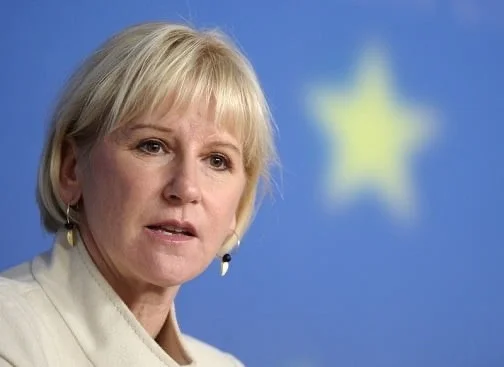
There must be a commitment to standing up against the systematic and global subordination of women
Swedish Foreign Minister Margot Wallström
Other countries – Canada, France, Luxembourg, Malaysia, Mexico, Spain and Sweden – have adopted feminist foreign affairs and aid development policies. Close to 90 per cent of Swedish aid is earmarked for gender equality.
Our feminist foreign affairs plan:
A feminist foreign affairs policy would be entirely consistent with promises articulated 75 years ago in the Charter of the United Nations:
- To work collectively to ensure peace and security.
- To build relations between nations based on equal rights and the self-determination of peoples.
- To solve global problems through international cooperation
- To promote respect for the human rights of all
Acknowledgement
We are indebted to the work of Leanne Smith, Director of the Whitlam Institute within Western Sydney University and James Cockayne, member of the World Economic Forum Global Future Council on the New Agenda for Equity and Social Justice in an article published by The Saturday Paper, 28 Nov 2020, reproduced in full below: